
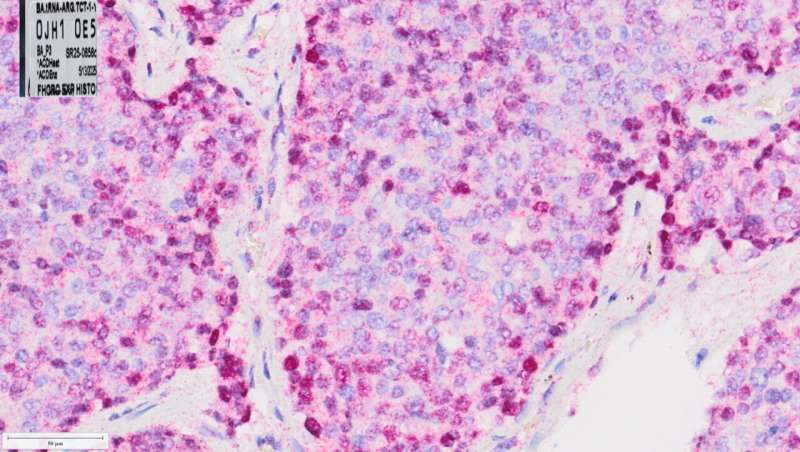
“The discovery opens an entirely new realm of cancer biology that was previously unrecognized,” said co-corresponding author Andrew Hsieh, a professor and associate director of Fred Hutch’s Human Biology Division. “Historically, tRNAs have been thought to play a bystander role in cell maintenance and disease, but our study shows that tRNAs can actively shape the identity of cancer cells.”
Tracing the shift to treatment resistance
Prostate cancer, a leading cause of cancer in men, can shift cellular characteristics over time. Initially, prostate cancer depends on the activity of the androgen receptor, a protein that fuels tumor growth and is the primary target of standard therapies. But then many tumors shift to an androgen receptor–independent state. Once independent of the androgen receptor, prostate cancer tumors become more aggressive and less responsive to therapy.