
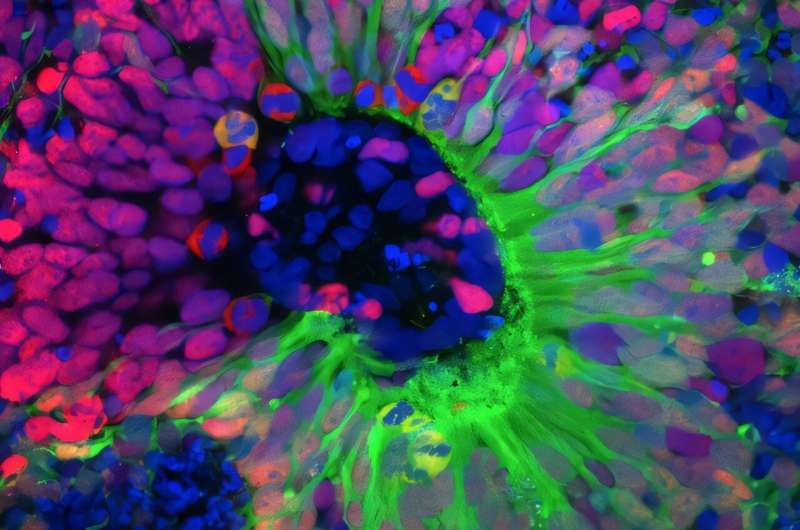
Around 700,000 people in France live with epilepsy. Nearly half are under 20, and for one in three, available medications offer no relief. In some cases, seizures are caused by a structural anomaly in the brain: focal cortical dysplasia type II (FCDII), a malformation that disrupts the organization of nerve cells in the cortex. For these patients, surgery—the removal of the seizure-generating area—is often the only option, with variable outcomes and significant risks.
FCDII belongs to a group of conditions known as “mTORopathies,” driven by mutations in genes that regulate cell growth and differentiation through the mTOR signaling pathway. These mutations can affect various cell types in the developing brain—neurons, astrocytes, or oligodendrocytes—producing a mosaic pattern: some cells carry the mutation, others do not.