
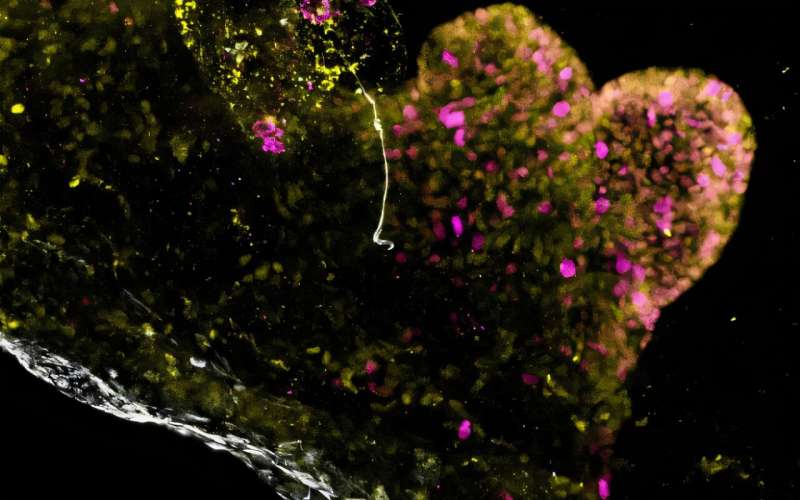
In a paper published in Nature Biomedical Engineering, the researchers explain how they isolated stem cells from patient stomach samples and grew them under special laboratory conditions in a petri dish to create mini-stomachs, known as organoids, that mimic the behavior of a human stomach.
They grew separate organoids for each of the three main stomach regions and then combined—or “assembled”—them into a single version, known as an assembloid version. This is the first time this has been successfully achieved.