
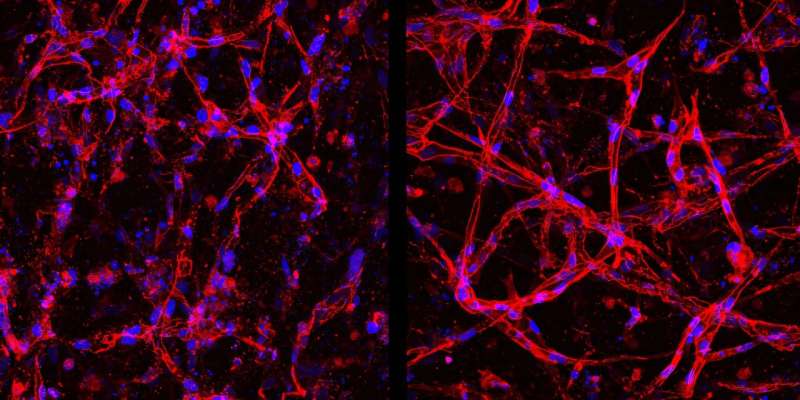
“Retinal vascular diseases affect millions of people in the US, but our understanding remains limited, hindering our ability to discover and develop new therapeutics,” said Sharon Gerecht, the Paul M. Gross Distinguished Professor and chair of biomedical engineering at Duke. “Using human stem cells, we generated the cells found in retinal blood vessels, paving the way for new therapeutic approaches.”
The old saying that the eyes are windows into the soul is more accurate than one might think. Neurons from the retina—the back part of the eye that detects light—extend directly to the brain, technically making the eyes part of the central nervous system.
Also, like the brain, the retina has a blood barrier that strictly controls what gets in and out, such as oxygen, nutrients, water and pharmaceuticals. While this barrier keeps the retina healthy and relatively protected from disease-causing agents, it also makes treating the retina difficult.