
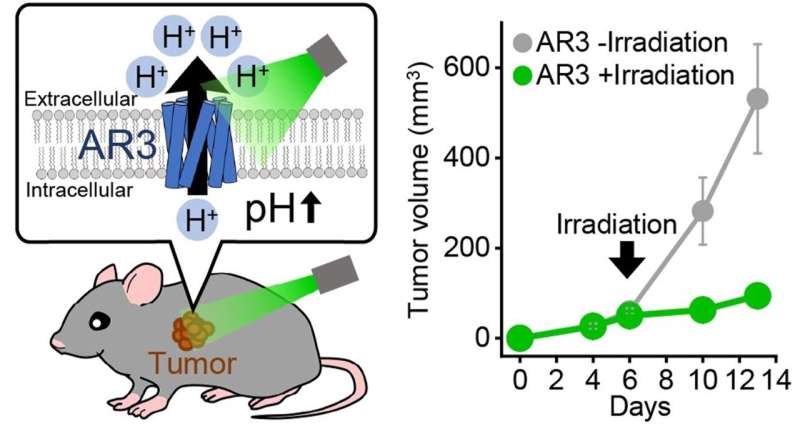
Cancer cells have mitochondria that supply energy for rapid growth and division, but an overly alkaline environment is thought to disrupt mitochondrial function, leading to apoptosis.
A microbial protein called Archaerhodopsin-3 (AR3) may hold the key to alkalinity-induced apoptosis. When exposed to green light, AR3 pumps hydrogen ions out of the cell, increasing alkalinity, disrupting cellular functions, and eventually inducing apoptosis.
New research on AR3 and cancer cells
The ability of AR3 to induce apoptosis in cancer-specific cell lines was described in a recent paper by Professor Yuki Sudo, Dr. Keiichi Kojima, Dr. Shin Nakao, and their team from the Graduate School of Medicine, Dentistry and Pharmaceutical Sciences at Okayama University, Japan. Their findings were published in the Journal of the American Chemical Society on November 4, 2025.