
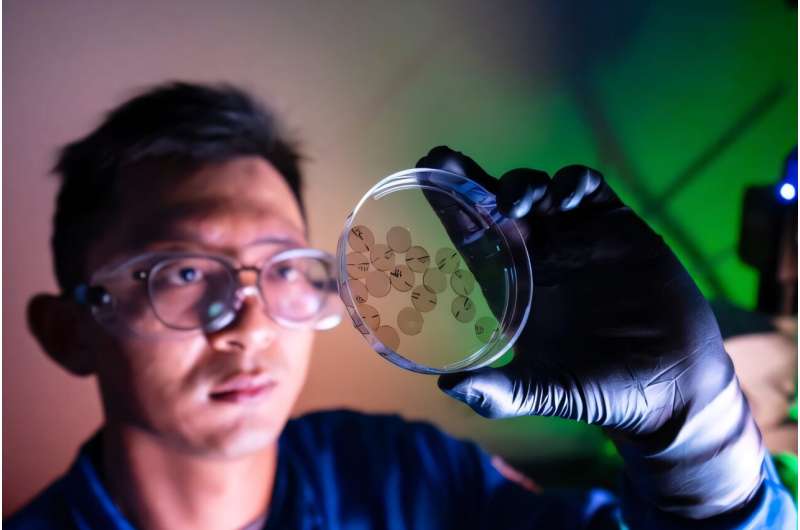
Researchers at the University of California, Irvine, have developed a polymeric biohybrid cardiac device that harnesses the power of light to electrically and mechanically control living heart tissue without the use of metal electrodes. The innovation represents a leap forward in how scientists study heart disease, test cardiac drugs and potentially treat life-threatening arrhythmias. The project is outlined in a paper published in the journal Cell Biomaterials.
The invention works by coupling engineered layers of optoelectronic polymer film, which can convert light into an electrical current, directly with living cardiac cells. When pulsed with gentle, visible green light, the material generates photocurrents that stimulate the heart cells to contract in synchrony, mimicking a healthy human heartbeat. The result is a soft, flexible, light-driven biohybrid device that overcomes longstanding limitations of traditional, metal electrode-based cardiac stimulation.