
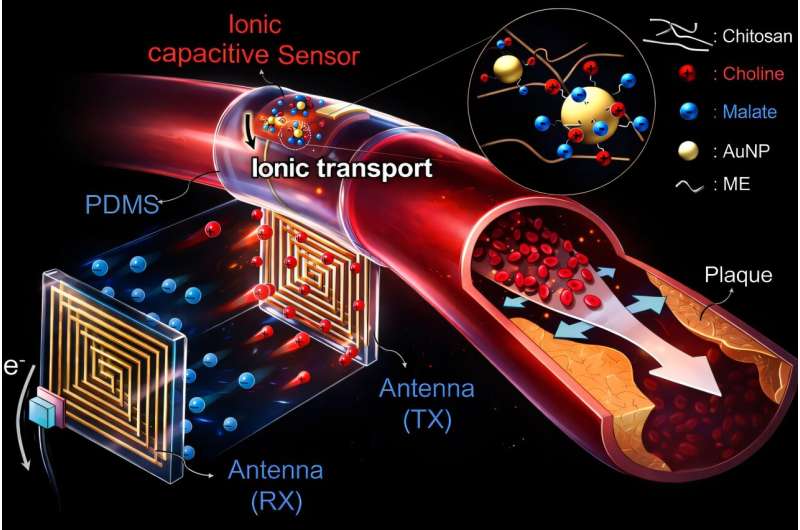
Wireless sensors used in wearable smart devices and medical equipment must be capable of detecting minute changes while maintaining high operational stability. However, existing technologies often utilize excessively high frequencies, leading to electromagnetic interference (EMI) or potential health risks to the human body. To address these fundamental issues, a Korean research team has developed a low-frequency-based wireless sensor technology.
Conventional wireless sensors suffer from low capacitance (the ability to store electrical charge), requiring high frequencies in the megahertz (MHz) range to compensate. However, these high-frequency methods can cause tissue heating or signal instability, limiting their practical application in clinical medical settings.