
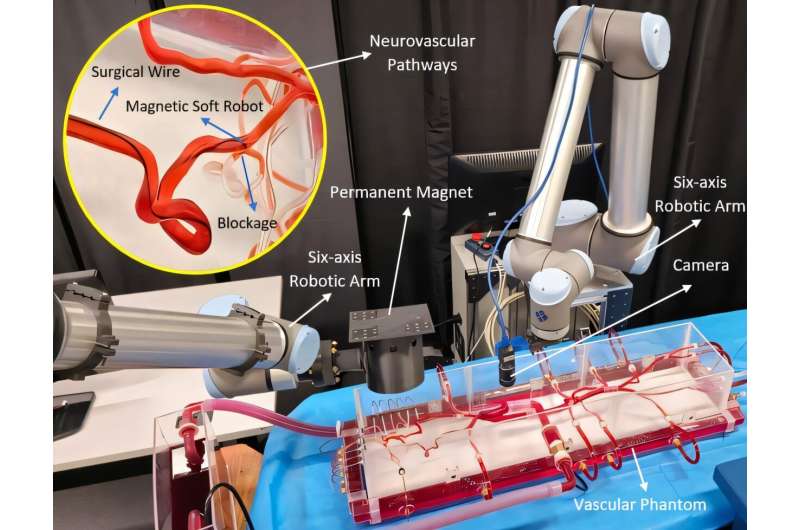
The method relies on small, soft, flexible robots that can maneuver through the delicate and complicated pathways of the human body to find and remove potentially dangerous obstacles to blood flow. The robots are made of a biocompatible rubber-like composite that contains microparticles that allow them to be wirelessly guided by external magnets.
The researchers believe their approach could substantially improve on current catheter-based interventions, as soft and magnetically guided robots could help surgeons avoid risks such as damage or perforation to vessel walls.