
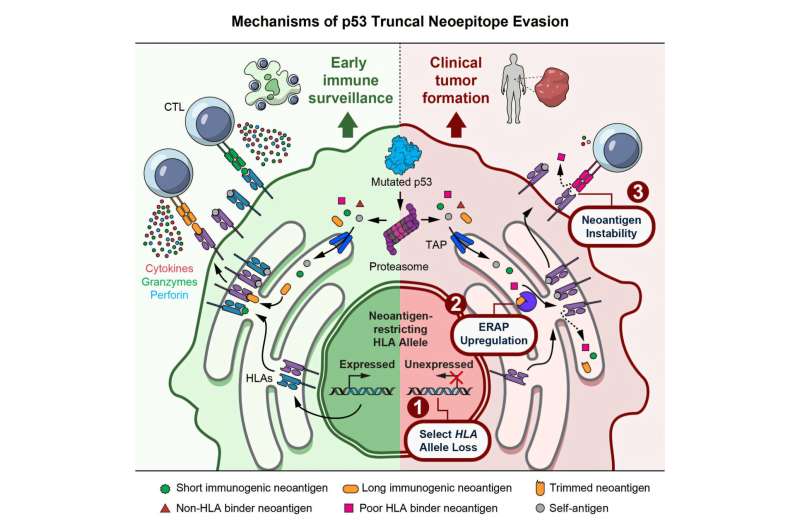
According to the study, the idea is particularly relevant to so-called “cold” tumors, which contain few effective tumor-fighting T cells or actively exclude and suppress them. Pancreatic cancer, prostate cancer, ovarian cancer, many breast cancers and glioblastoma are among the major tumor types commonly described as immunologically cold. Not every tumor within these categories is cold, but as groups, they have generally been much harder to treat with immune checkpoint drugs than highly inflamed tumors, such as many melanomas.
The paper was published in Immunity.
The new work identifies a key reason a tumor can remain immunologically quiet: The cancer may fail to display useful molecular targets in the first place. T cells do not read a tumor’s DNA directly. Instead, they inspect tiny protein fragments, so-called peptides, held on the cell surface by HLA molecules. The complete collection of these displayed fragments is called the immunopeptidome—effectively, the cell’s molecular “window display.” If a cancer-specific fragment never reaches that window, or disappears too quickly, even a highly capable T cell may have nothing durable to attack.