
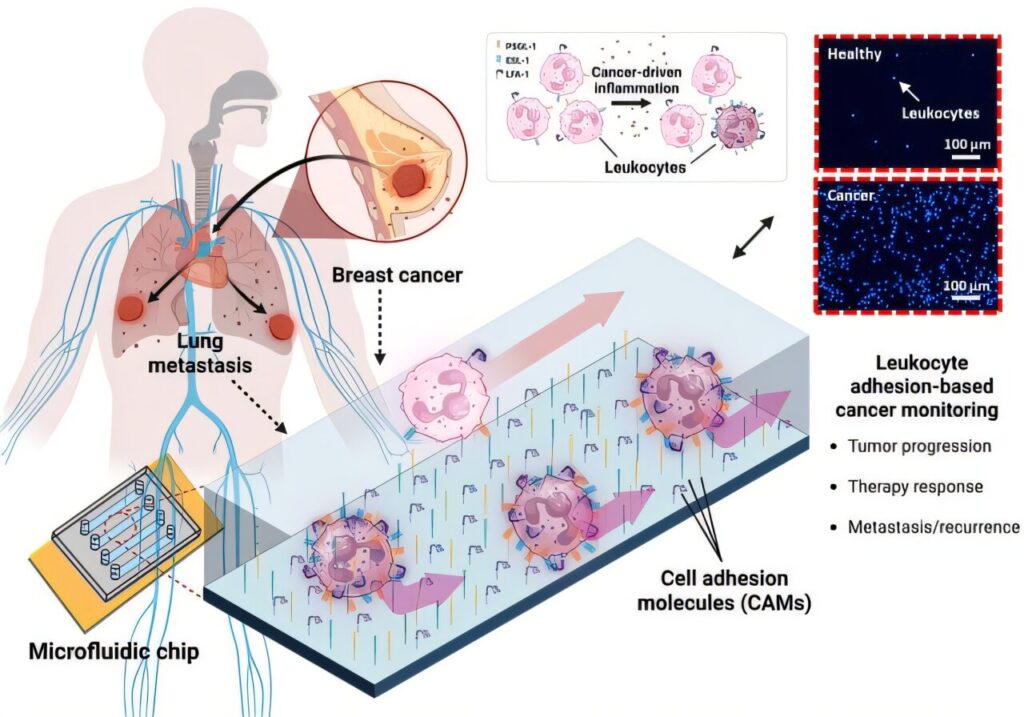
Unlike traditional liquid biopsy approaches that directly seek circulating tumor cells, this innovative method taps into the body’s immune response—specifically, the increased adhesion capacity of leukocytes induced by tumor-related inflammation. The findings were published in Biosensors and Bioelectronics.
This cutting-edge device provides a minimally invasive, real-time window into the patient’s immune system, enabling early detection of minimal residual disease—a critical factor often missed by imaging techniques such as MRI or CT scans. It also offers a cost-effective complement to existing liquid biopsy technologies, providing dynamic insights into treatment response and disease progression.