
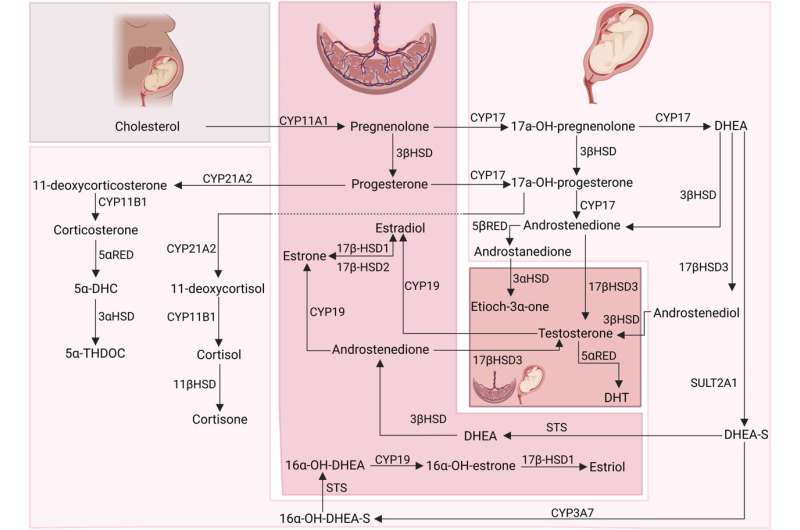
Since human pregnancy is too complex to study and raises ethical concerns, the team built a miniature lab model that mimics the interaction among a mother, the placenta and the fetus. It combines three types of human cells to represent the different layers of the placental barrier and the fetal adrenal gland. They tested several types of plastics we encounter daily, including PMMA (transparent, glass alternative), PET (used in soda bottles), PVC (used in pipes and packaging) and polystyrene (used in packing materials).
All the types of plastic tested were able to move from the mother’s side through the placental barrier to the baby’s side. The MNPs didn’t just pass through untouched: Some were absorbed into the cells that make up the placenta and the baby’s blood vessels. The particles also disrupted levels of hormones such as etiocholanolone and estrogen, which are essential for the mother’s health and the baby’s development.