
A routine checkup at the dentist ends with bad news: Tooth decay has left a large cavity, and the tooth needs a crown. The treatment requires several follow-up appointments. During the first appointment, the dentist removes the decay, fills the cavity and prepares the tooth for the crown. She then takes an impression and fits a temporary crown. The permanent crown is produced based on the impression and can only be placed at a later appointment.
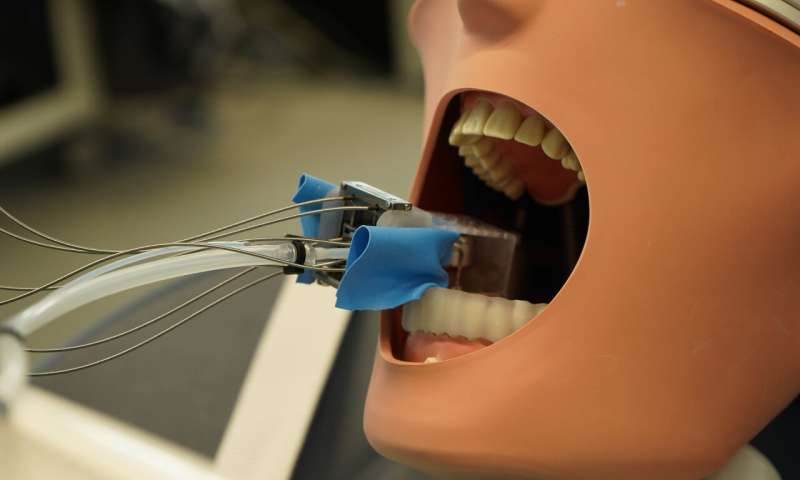
In the future, this process could become much faster thanks to a small dental robot developed by researchers at the Department of Biomedical Engineering at the University of Basel. The prototype is about the size of a wine cork, measuring just 43 by 26 by 28 millimeters. Its motors and control system are located outside the robot and connected to it via flexible drive shafts, cables and tubes.