
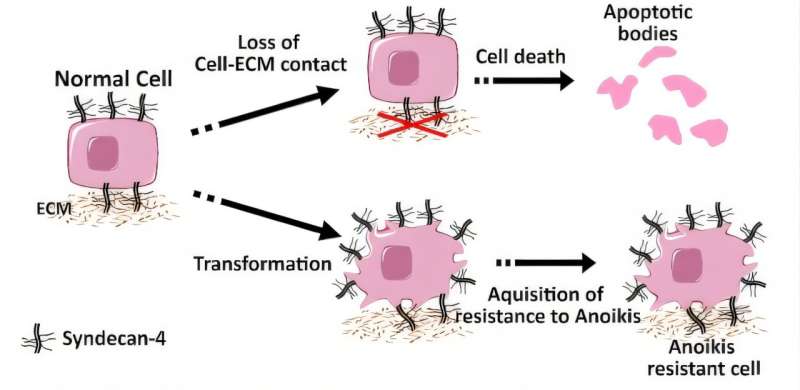
The work showed that overexpression of the syndecan-4 (SDC4) receptor provides tumor cells with a protective shield. In a laboratory experiment, the researchers silenced the receptor and halted the accelerated growth of tumor cells, causing them to resume responding to natural programmed cell death mechanisms.
Our study shows that SDC4 could become a promising therapeutic target and serve as a diagnostic marker for monitoring disease progression. The strategy of silencing this molecule has the potential to prevent the proliferation of cancer cells, but we’re still in the early stages of research and need to validate the results for each specific case of the disease,” said Carla Cristina Lopes, full professor in the Department of Biological Sciences at UNIFESP and lead author of the study.