
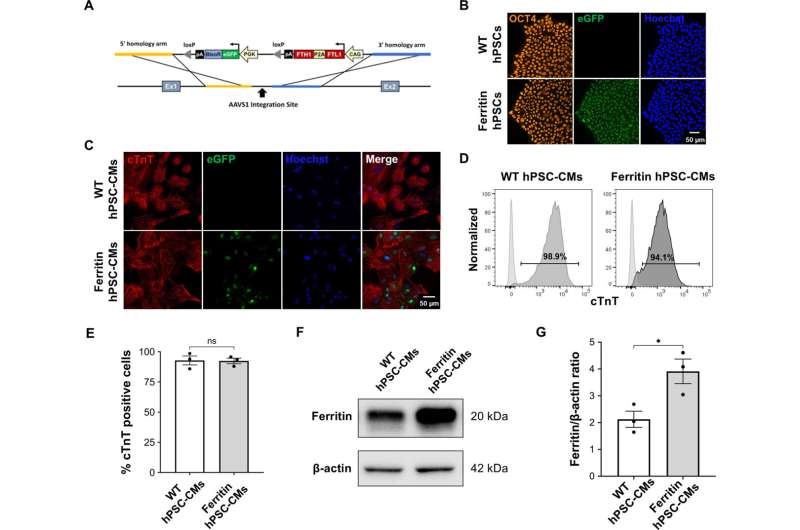
The method allows researchers to visualize where transplanted cells survive over time, which could help scientists evaluate and improve emerging stem cell therapies for heart damage such as those caused by heart attacks. Professor Hai-Ling Margaret Cheng and her team have shown that an imaging platform known as “bright ferritin MRI” can be used to track transplanted human pluripotent stem-cell-derived cardiomyocytes in the hearts of rats for up to eight weeks. The findings are published in Magnetic Resonance in Medicine.
Human pluripotent stem-cell-derived cardiomyocytes can form new heart muscle and integrate with existing tissue. However, many transplanted cells do not survive in clinical trials, and researchers currently lack reliable tools to monitor transplanted cells over long periods inside the body. Existing imaging methods either work only in small animals or rely on labels that fade or produce misleading signals as cells divide or interact with the immune system.