
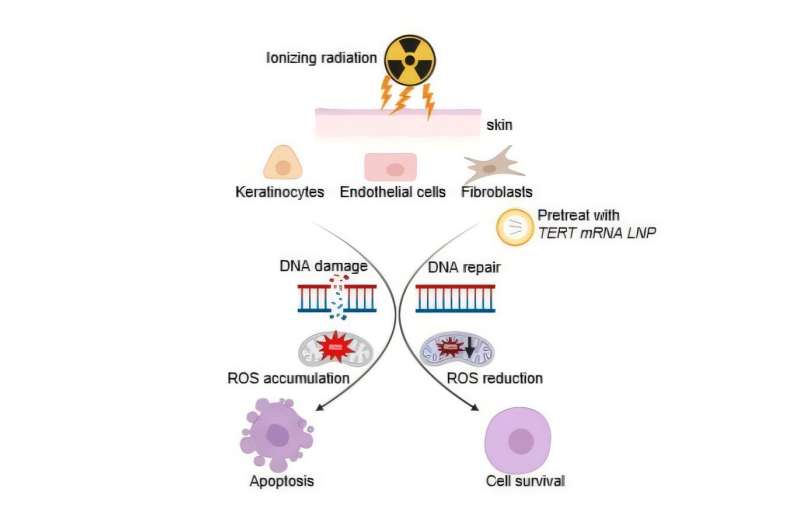
The researchers tested a new mRNA-based therapy that instructs skin cells to produce telomerase reverse transcriptase (TERT), a protein known for its role in cell health. Human skin cells and tissue samples were treated with TERT mRNA prior to radiation exposure, resulting in reduced DNA damage. The study, published in Molecular Therapy, was led by John Cooke, M.D., Ph.D., chair of the Department of Cardiovascular Sciences at the Houston Methodist Research Institute.
“Telomerase has this very interesting effect to protect against genomic DNA damage,” Cooke said. “That is surprising because it is usually believed that it only works at the ends of chromosomes, but we’re finding it helps keep all of our DNA safe. We could reverse clinically relevant doses of radiation-induced DNA damage with telomerase. This is exciting because it could potentially be a therapy to help people who undergo radiotherapy.”