
Up to 10% of couples worldwide are affected by infertility, according to World Health Organization estimates, and male factors are the primary cause in about half of those cases. In many instances, male infertility results from genetic defects that disrupt sperm production.
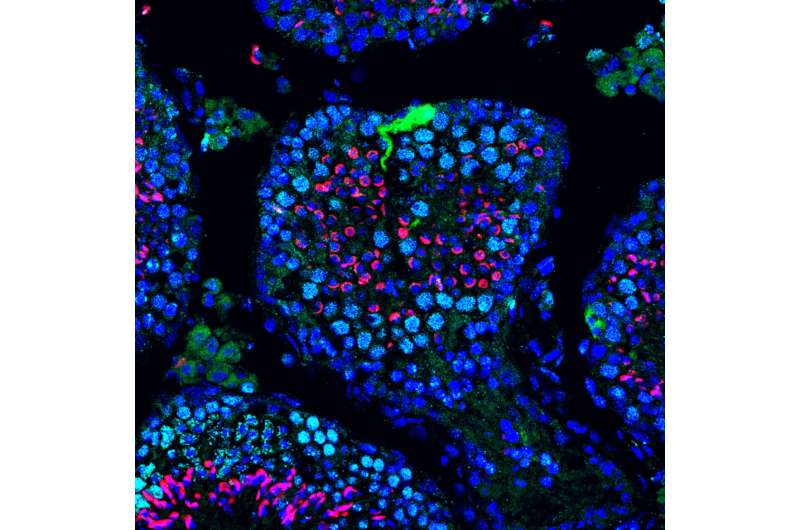
To develop a targeted method to address genetic defects linked to infertility, Takashi Shinohara of Kyoto University, Japan, and his team injected mRNA—a short-lived molecule containing the blueprint of a gene of interest—into the testes of mice. The use of mRNA was specifically chosen to avoid permanent genetic modification of testis cells or other cells in the body.