
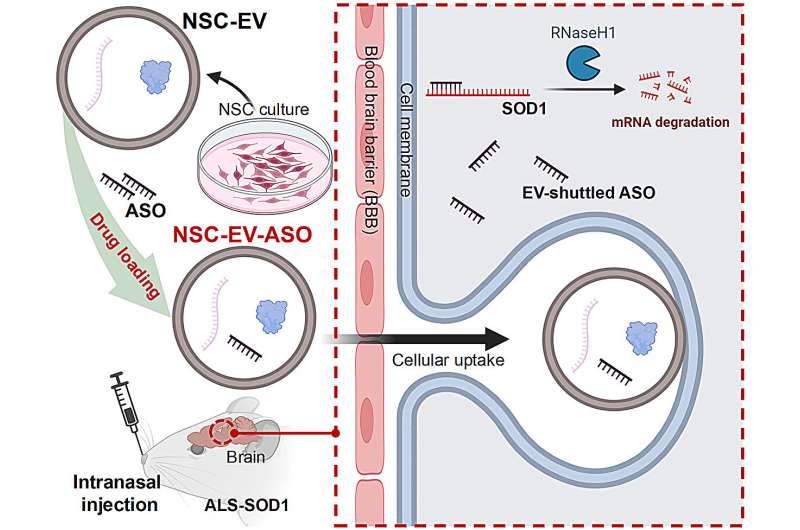
Nature may already have the answer. New research from the University of Georgia’s Regenerative Bioscience Center (RBC) is revealing how tiny, naturally produced carriers could help deliver medicines to the cells that need them most.
“Our research grew from a simple idea—instead of forcing a drug to find its way into the brain, give it a vehicle that already knows how to get there,” said Yao Yao, an associate professor in UGA’s College of Agricultural and Environmental Sciences and corresponding author of the study published in the Journal of Extracellular Vesicles.