
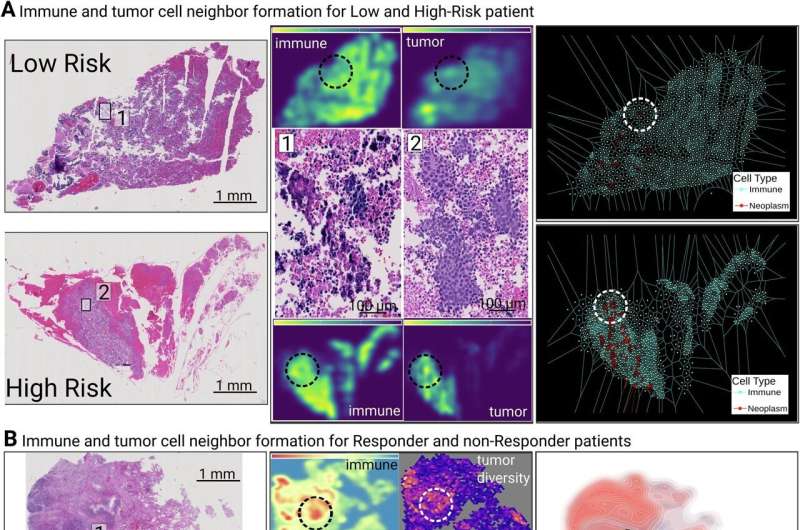
The accuracy of the tool, called PhenopyCell, has been verified by the three institutions that collaborated on the study published in the journal npj Precision Oncology. PhenopyCell was developed by a research team co-led by thoracic oncologist Prantesh Jain, MD, FACP, of Roswell Park Comprehensive Center, and Anant Madabhushi, Ph.D., of Winship Cancer Institute of Emory University in Atlanta.
The team’s findings offer a ray of hope for the 70% of patients with small cell lung cancer (SCLC) who have extensive-stage disease when they are first diagnosed. At that point, the disease has spread to other parts of the body and is rapidly progressing, with most patients surviving only 12 to 13 months, so it’s critically important to quickly identify the best potential treatment.