
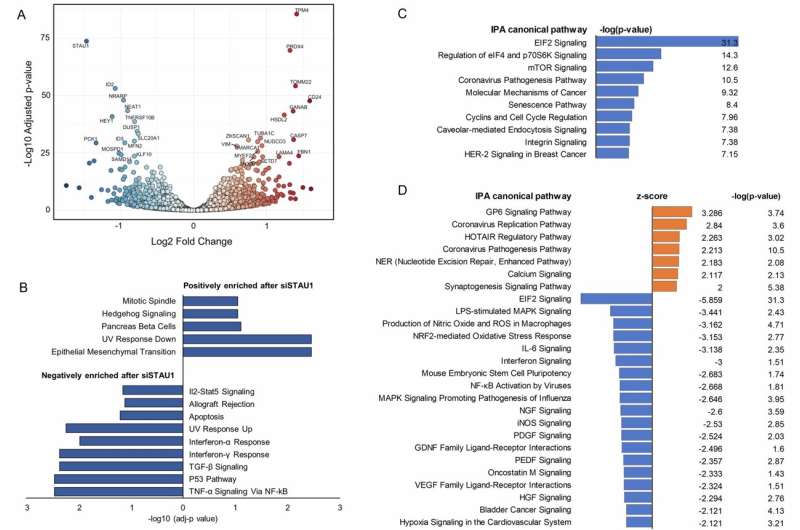
When brain cells die in diseases like ALS (amyotrophic lateral sclerosis) and frontotemporal dementia, they often activate a “self-destruct” program called apoptosis. Now, researchers in the Pulst-Scoles Laboratory in the Department of Neurology at the University of Utah have discovered a promising new way to protect neurons from this harmful process by targeting a protein called STAUFEN-1.
The findings, published in the journal Cell Death & Disease, could lead to new treatments for multiple neurodegenerative diseases, including ALS, Parkinson’s disease, and Alzheimer’s disease.