
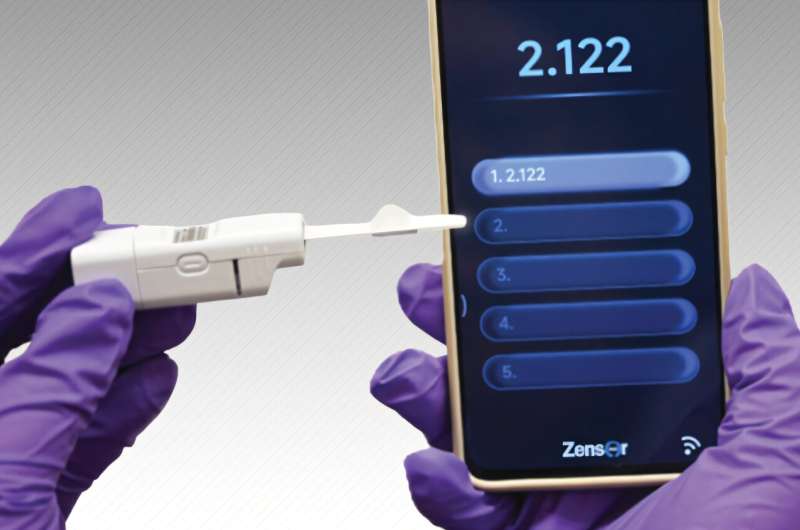
“We were able to amplify the signal through our new single-atom catalyst and make sensors that are smaller, smarter, and more sensitive,” said Annie Du, research professor in WSU’s College of Pharmacy and Pharmaceutical Sciences and co-corresponding author on the work. “This is the future and provides a foundation for being able to detect other disease biomarkers in the body.”
Measuring glucose levels is important for diabetes, helping to keep patients healthy and preventing complications. Continuous glucose monitors on the market require the use of small needles to insert the monitor, and people can get skin irritation or rashes from the chemical processes that are done under the skin. Furthermore, they’re not always sensitive enough.