
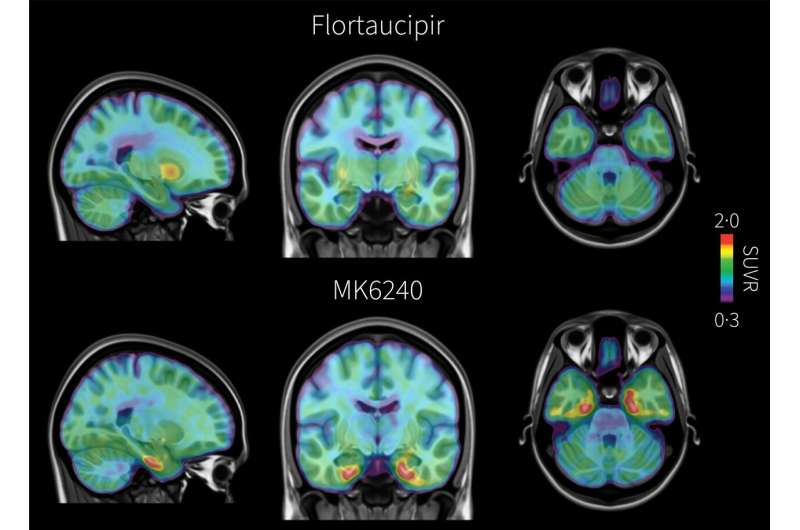
The study team compared the ability of two “tracers”—compounds that attach to proteins and light up in brain scans—to detect Alzheimer’s-associated tangles of tau protein. Results suggest that the choice of tau tracers used for non-invasive PET scan brain imaging in Alzheimer’s diagnostics can change who tests positive and influence disease detection and treatment eligibility.
“Tau is the biology most closely tied to symptoms and future decline,” said corresponding author Tharick Pascoal, M.D., Ph.D., associate professor of psychiatry and neurology at Pitt and a behavioral neurologist at UPMC.