
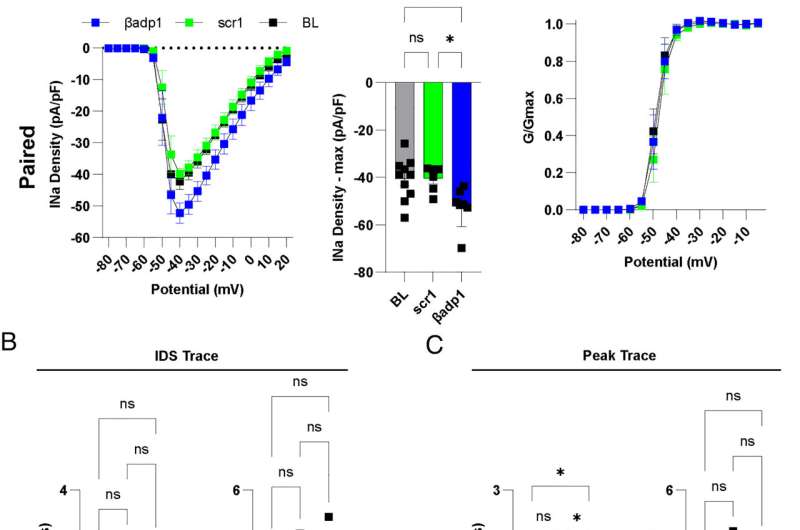
Those direct connections, called gap junctions, are microscopic channels that allow electrical current to pass from one cell’s interior into the next. But the new findings support the existence of an additional electrical relay involving sodium channels and the perinexus—a nanoscale space where neighboring heart muscle cells meet.
Xiaobo Wu, a postdoctoral researcher in Robert Gourdie’s laboratory at the Fralin Biomedical Research Institute at VTC, led the study, drawing on earlier discoveries by Gourdie’s team about the perinexus and how sodium channels are organized within this tiny junction.