
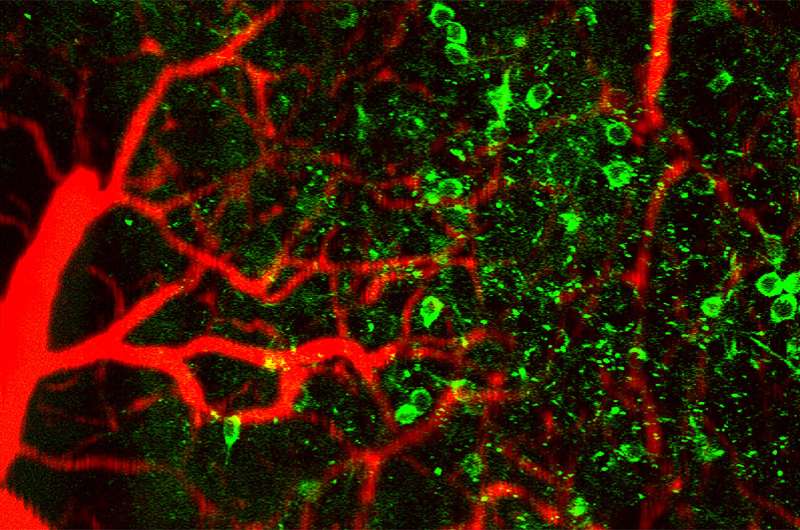
Hu, a professor of biomedical engineering at Washington University in St. Louis, and his team at the McKelvey School of Engineering have developed a new way to integrate two powerful techniques: two-photon microscopy and photoacoustic microscopy (TPM-PAM). The system will allow researchers to see in real time how the brain’s vasculature delivers oxygen to neurons. The new system could have profound implications for studying neurodegenerative diseases, stroke and other diseases connected to neurovascular coupling.
“Using this technology gives us a better understanding of these disease mechanisms,” Hu said.