
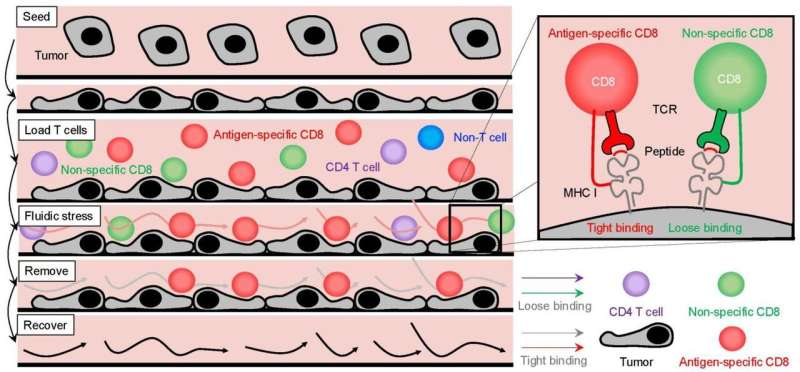
The study, published today in the Journal for ImmunoTherapy of Cancer, was led by Alexandre Reuben, Ph.D., assistant professor of Thoracic/Head and Neck Medical Oncology, and Amanda Montoya, senior research assistant in the Reuben lab.
“This approach turns an extremely rare population of tumor-reactive T cells into something we can reliably detect, study and use, opening new possibilities for truly personalized medicine,” Reuben said. “It overcomes key challenges associated with antigen-specific T cell isolation, allowing the tumor itself to reveal which immune cells are most effective against it instead of trying to guess those targets in advance.”