
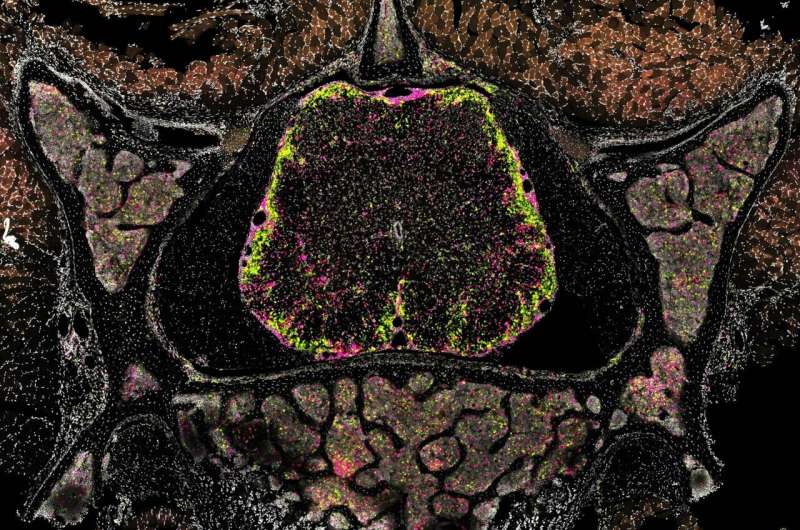
Macrophages, immune cells responsible for detecting damaged cells, germs or other debris in the central nervous system (CNS) and eliminating them, have been found to play a key role in MS. These cells can adopt different functional states, which are associated with either inflammation or the repair of damage in the CNS.
Researchers at Ludwig-Maximilians-University Munich and Technical University Munich recently carried out a study aimed at further exploring the contribution of macrophages to the neuroinflammation observed in patients diagnosed with MS and some other neurological diseases.
Their paper, published in Nature Neuroscience, introduces a new approach to study immune cells and the signals driving their behavior in living organisms.
‘”Monocyte-derived macrophages play a dual role in neuroinflammatory conditions, contributing both to disease progression and to tissue repair,” Arek Kendirli, co-first author, told Medical Xpress.