
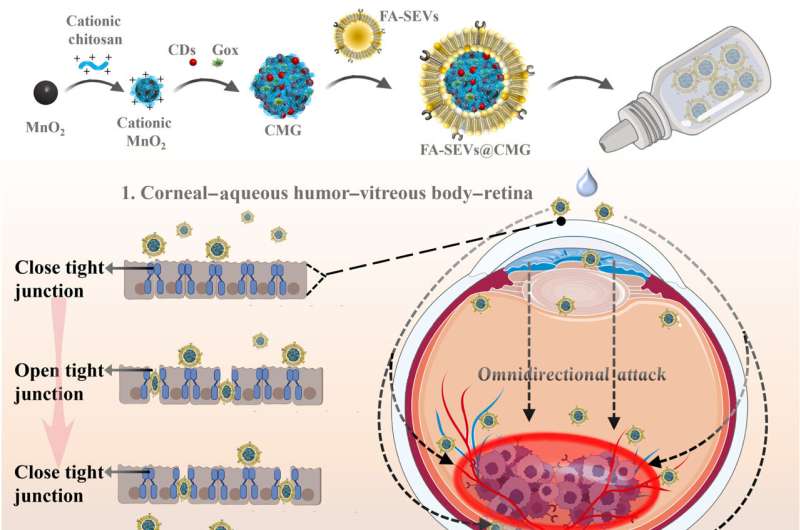
Past studies have shown that tiny vesicles called exosomes, which are naturally secreted by cells, have shown promise as drug carriers due to their ability to cross biological barriers and their low immune response. Semen-derived exosomes (SEVs), in particular, have evolved to penetrate through the female reproductive tract with the help of specific proteins.
“These proteins enable SEVs to traverse formidable biological barriers, suggesting that SEVs may have inherent properties conducive to penetrating ocular barriers. This unique capability positions SEVs as a promising vehicle for noninvasive drug delivery to the posterior segment of the eye,” the authors of the new study write.