
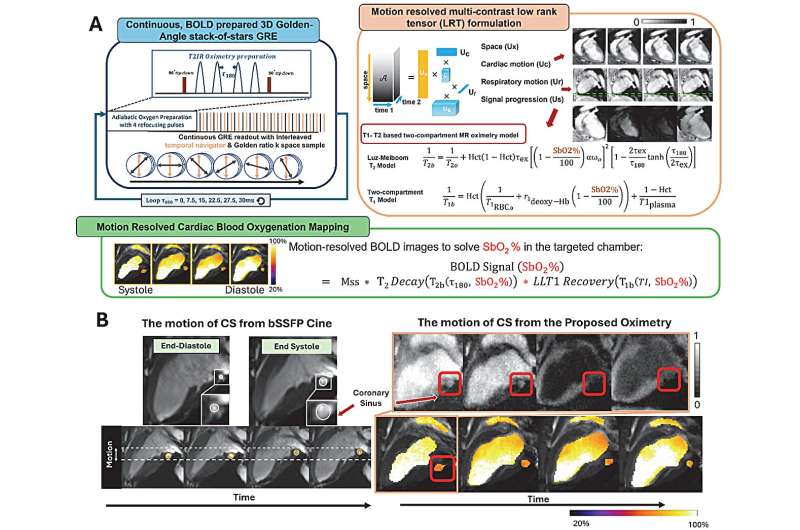
The heart’s ability to use oxygen efficiently is a critical indicator of its health, but tests to measure this function have drawbacks that can limit their use. A new Cedars-Sinai Health Sciences University study found that a new MRI system developed at Cedars-Sinai might overcome this challenge. The findings, published in Science Translational Medicine, could one day improve management of heart failure, in which the heart fails to pump enough blood to meet the body’s need for blood and oxygen.
Poor use of oxygen by the heart is an early indicator of heart failure, which affects nearly 7 million people in the U.S.
“Our study shows how MRI could be used to quickly and noninvasively determine heart oxygen use in the clinic,” said Hsin-Jung Yang, Ph.D., director of Cardiac Imaging Research in the Biomedical Research Imaging Institute and corresponding author of the study. “With further research and development, this advance could unlock new frontiers in early diagnosis, personalized therapy and next-generation treatments for heart failure.”