
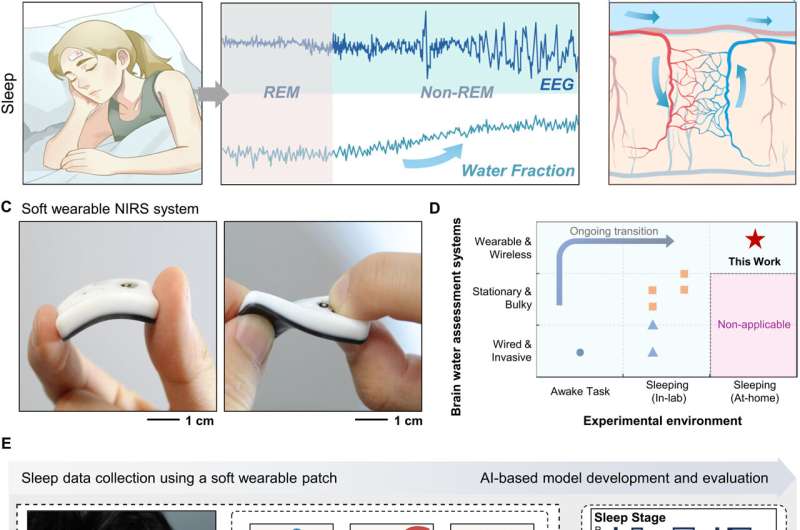
Traditional approaches to brain monitoring are often invasive, costly and limited to clinical settings. New research from Georgia Tech points to a more accessible approach. A study published in Science Advances shows that a soft, wireless wearable device could help enable home-based monitoring of physiological changes associated with sleep and brain health.
The research team, led by W. Hong Yeo, Peterson Endowed Professor in the Woodruff School of Mechanical Engineering and director of the Wearable Intelligent Systems and Healthcare Center and the Korea KIAT-Georgia Tech Semiconductor Electronics Center, developed a wearable device that uses light-based sensing and wireless communication to support natural sleep monitoring at home.