
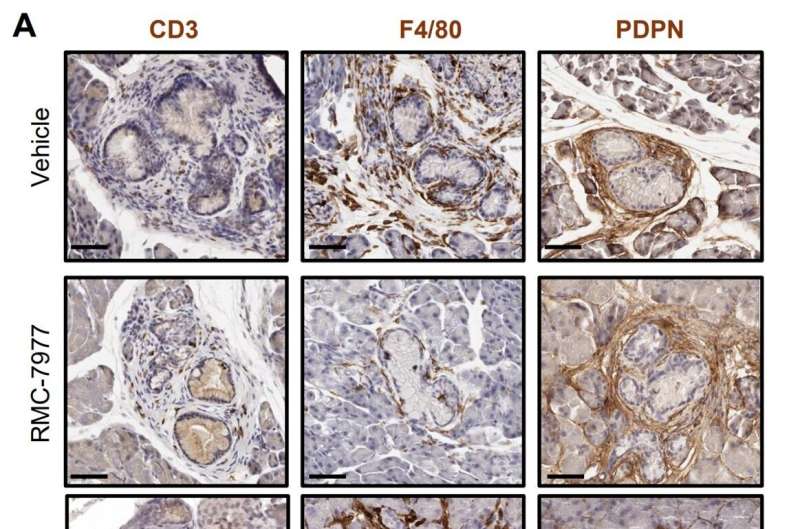
The research, published in Science, was led by physician-scientists in the Perelman School of Medicine at the University of Pennsylvania and Penn Medicine’s Abramson Cancer Center. It’s the first time scientists have shown that a medical intervention could stop growth of pre-cancerous lesions in the pancreas before they develop into pancreatic cancer, providing strong evidence for the burgeoning field of cancer interception.
“I’m convinced that cancer interception will become the next frontier of cancer therapy,” said co-corresponding author Robert Vonderheide, MD, DPhil, director of the Abramson Cancer Center.
“Pancreatic cancer has a stubbornly poor prognosis, limited treatment options and no proven screening or prevention strategies. If we can find a way to intercept it—to identify and neutralize abnormalities on their earliest steps toward malignancy—it would be a game-changer.”