
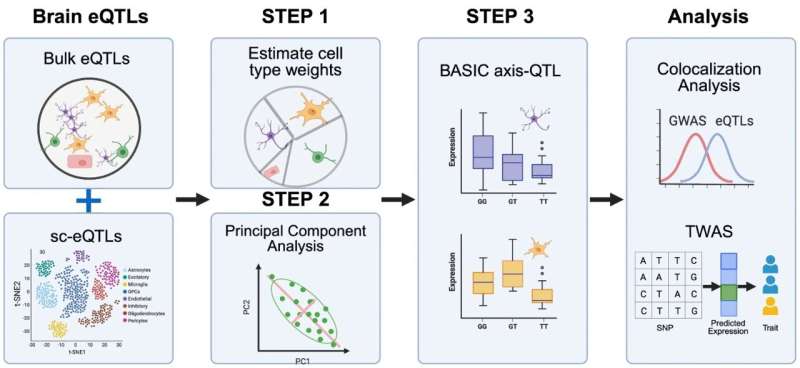
The new approach, published in Nature Communications, outperforms existing methodologies, identifying approximately 75% more genes of interest. The researchers also found new genes linked to the risk of Alzheimer’s disease and amyotrophic lateral sclerosis (ALS) and therapeutic targets, some of which have already-existing promising treatments.
“There’s a lot of emphasis on data generation, but relatively modest efforts devoted to better analyzing the data. There’s a lot more information that could be extracted from existing data sets and our work seeks to better digest this information,” said Bibo Jiang, assistant professor of public health sciences at Penn State College of Medicine and senior author of the study. “It has the potential to create a new paradigm for understanding brain-related disease.”