
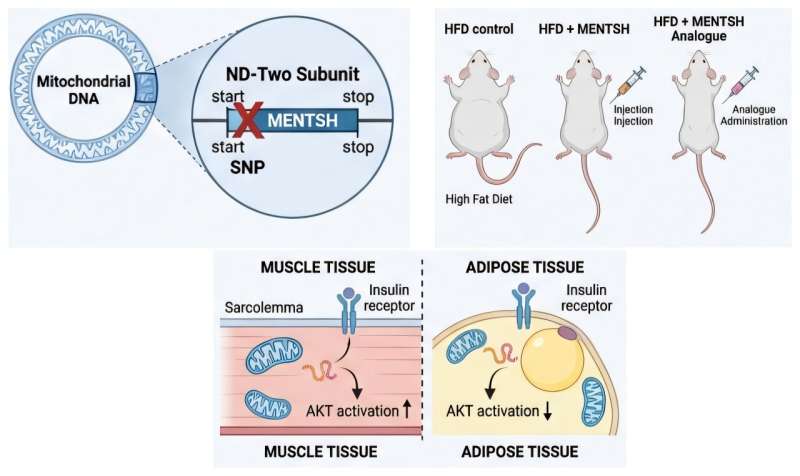
Obesity and type 2 diabetes are among the fastest-growing threats to human health, yet their genetic underpinnings remain only partly understood. While most disease-gene research focuses on the larger set of DNA found in the nucleus within cells, the much smaller genome found in mitochondria—cells’ energy factories—is now known to encode a family of microproteins with wide-ranging biological effects.
The new study adds a striking example to that list, said Pinchas Cohen, the study’s senior author, USC Distinguished Professor and dean of the USC Leonard Davis School of Gerontology. The findings were published in the journal Theranostics.