
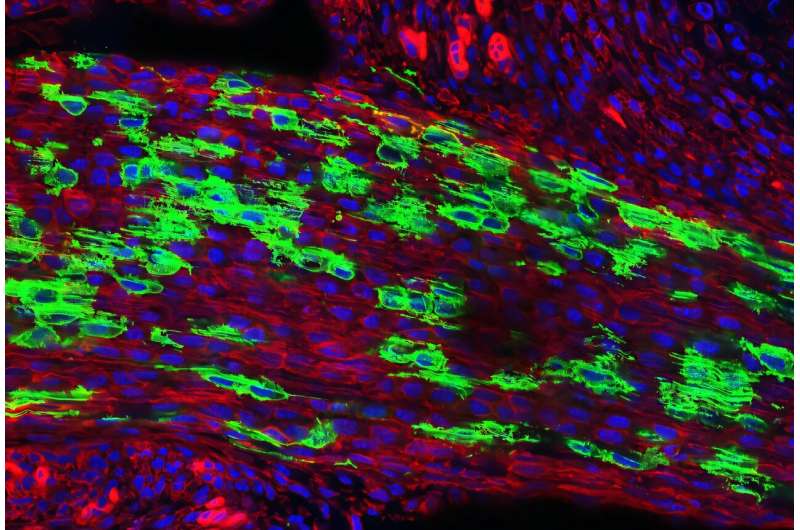
They also found that when these stem cells become hyperactive in the lower spine, they contribute to lumbar spinal stenosis. This condition, which affects an estimated 103 million people worldwide, involves enlarged ligaments that can narrow the spinal canal and compress nerves, causing pain, numbness and difficulty walking.
The study, published Sept. 7 in Cell, suggests that treatments targeting these stem cells may lead to new options for patients, including a class of drugs currently used to manage high blood pressure.