
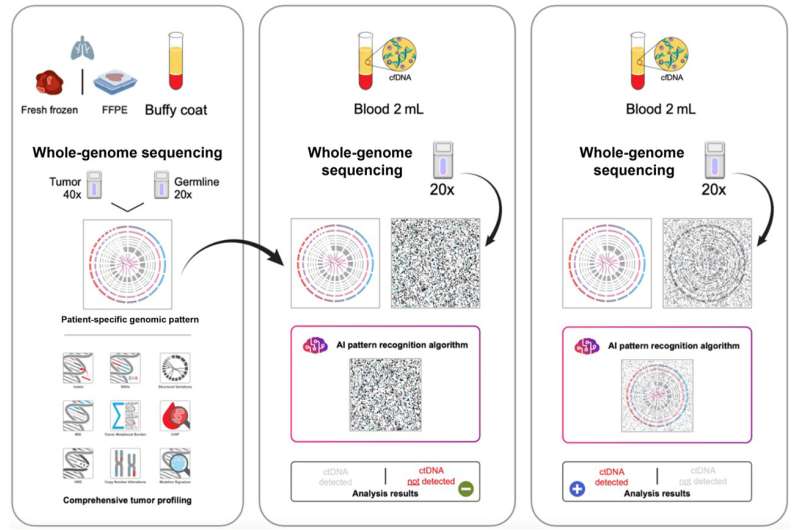
Non–small-cell lung cancer (NSCLC) is the most common type of lung cancer and remains the major cause of cancer-related death. Small tumors in patients with early-stage NSCLC (I to II) are usually surgically removed, and survival rates are reasonably high. However, even in stage I, disease recurrence rates range between 5% and 19%, and imaging follow-up remains standard of care.
“As oncology shifts toward personalized risk-adapted care, liquid biopsies are emerging as a critical tool to bridge the gap between treatment completion and clinical recurrence,” explains lead investigator Matija Snuderl, M.D., Department of Pathology, NYU Langone Health and Grossman School of Medicine, and Laura and Isaac Perlmutter Cancer Center, New York, New York.