
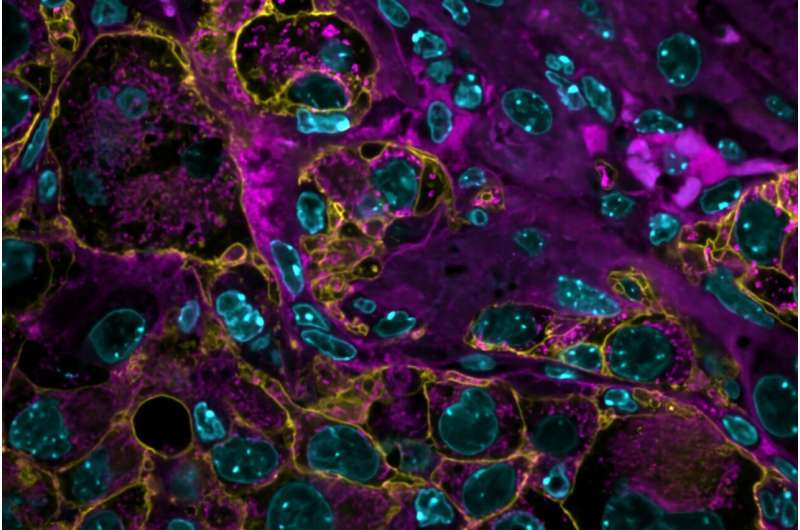
Scientists have long known that cancer cells rewire their metabolism to survive and that these changes largely depend on where a cancer develops. Two tumors driven by the same genetic mutation, one in the lung and one in the pancreas, can have very different metabolic needs. But even within the same organ, different cancer-causing mutations can shape how tumors obtain and use energy. For instance, in the liver, several genetically distinct and particularly difficult-to-treat cancers can take hold.
One obstacle to better understanding such distinctions has been the difficulty of homing in on metabolism in tumors, which contain a mixture of cancerous and healthy cells. Additionally, conventional methods for isolating mitochondria, the cell’s central metabolic hubs, can take hours, during which the molecules that researchers are trying to investigate may change or degrade. Moreover, Birsoy’s group wanted to know not just what makes each tumor distinct, but which of those differences actually matter for the cancer cell’s survival, a significantly more complex question.