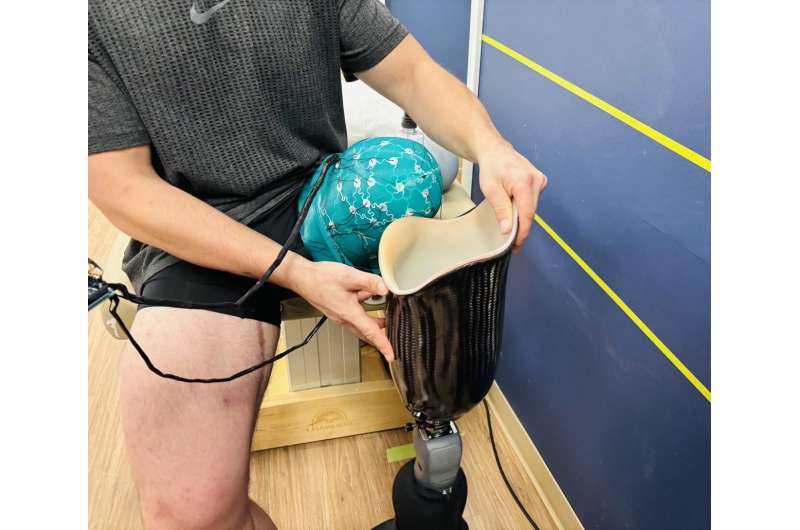
“For the first time, this 3D printing technology is capturing unique pressure and force distribution data from a patient, and using that data to design a custom prosthetic device and fabricate a much lighter, more breathable and pressure-responsive socket,” says Woo Soo Kim, professor at the School of Mechatronic Systems Engineering and corresponding author of a new study published in Biosensors and Bioelectronics.
