
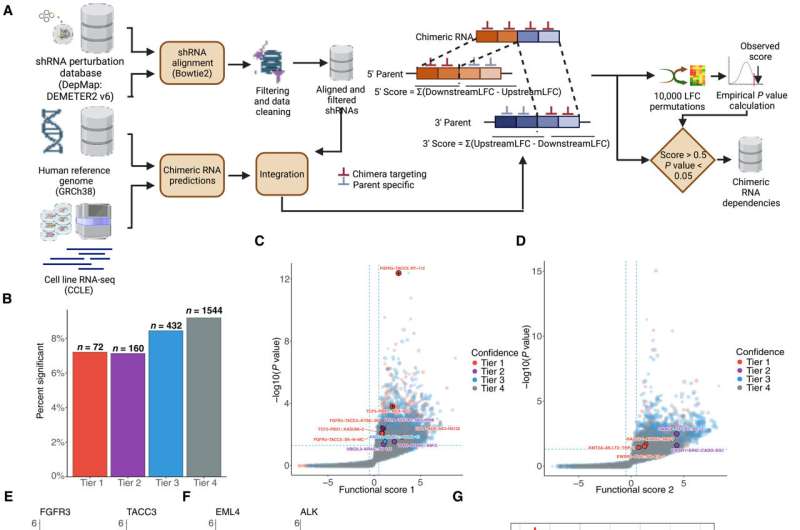
It’s called the “G-value paradox”: Humans have no more protein-making genes than a tiny roundworm, yet somehow our bodies and brains are vastly more complex. Scientists have come up with various explanations for how this can be, but UVA’s Hui Li, Ph.D., has identified an important and surprising contributor: “chimeric” RNA once thought to be cellular junk.
Li’s new findings indicate these RNA molecules are far from useless debris. Instead, they can generate genetic instructions—expanding our cellular blueprints beyond our genes—and perform essential functions in healthy cells.