
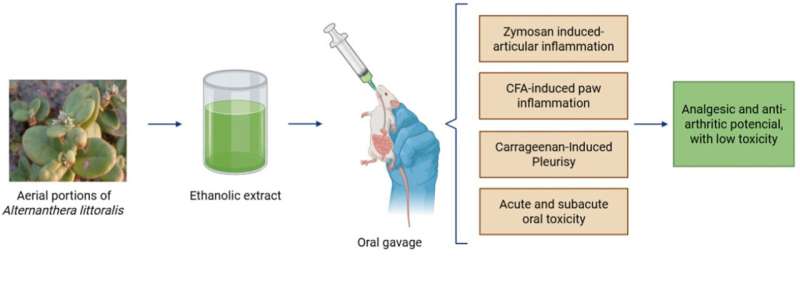
Native to the Brazilian coast, this plant has been used in folk medicine to combat inflammation, microbial infections, and parasitic diseases. Until now, there has been little pharmacological evidence to support these applications or analyze their safety.
The study is published in the Journal of Ethnopharmacology.
The first step of the study was to conduct phytochemical analyses of the plant to identify the main bioactive compounds in the ethanolic extract of its aerial parts. This analysis was conducted by Marcos Salvador, a pharmacist from the Institute of Biology (IB) at UNICAMP. Next, the team led by pharmacologist Cândida Kassuya from the Faculty of Health Sciences at UFGD evaluated the anti-inflammatory efficacy in experimental models of arthritis.