
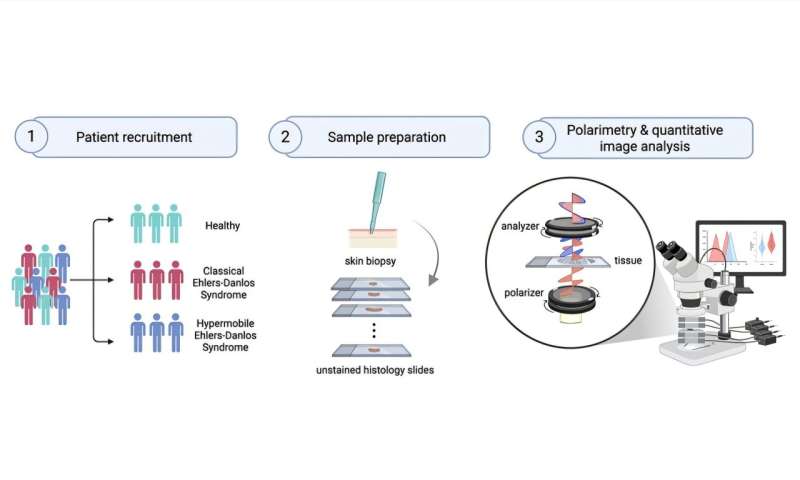
Ehlers–Danlos syndromes (EDS) are inherited conditions that affect the body’s connective tissue, which provides strength and support to the skin, joints, and blood vessels. People with EDS are often affected by stretchy skin, loose joints, and fragile tissues. Two common subtypes are classical EDS (cEDS) and hypermobile EDS (hEDS).
While cEDS has an identifiable genetic biomarker, hEDS has no known genetic cause. Because diagnosis of hEDS depends entirely on physical exams, patient history, and ruling out other conditions, it can take more than ten years for patients to receive a confirmed diagnosis. Collagen, the main structural protein in connective tissue, is altered in both subtypes, but current laboratory methods for examining collagen are either not sensitive enough or too costly and complex for routine clinical use.