
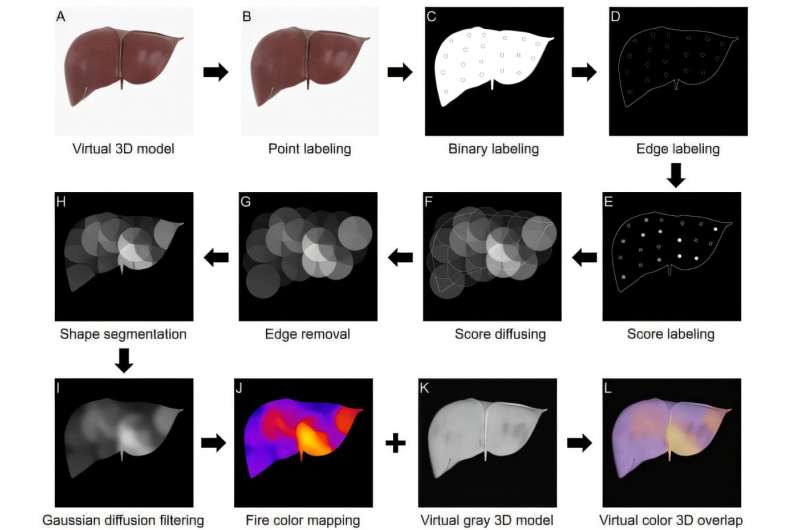
A team of University of Oklahoma researchers has developed a noninvasive imaging approach that could help transplant teams evaluate donor livers more comprehensively and make faster, more informed decisions. Qinggong Tang, Ph.D. leads the OU research lab that recently published these findings in Science Translational Medicine.
Doctors currently determine liver health primarily through biopsies, in which a small piece of tissue is removed and examined under a microscope. However, this is an invasive procedure and cannot account for the health of the entire liver. Tang said this can lead to cases in which doctors may not feel comfortable using a liver for a transplant if the biopsy results don’t feel conclusive enough.