
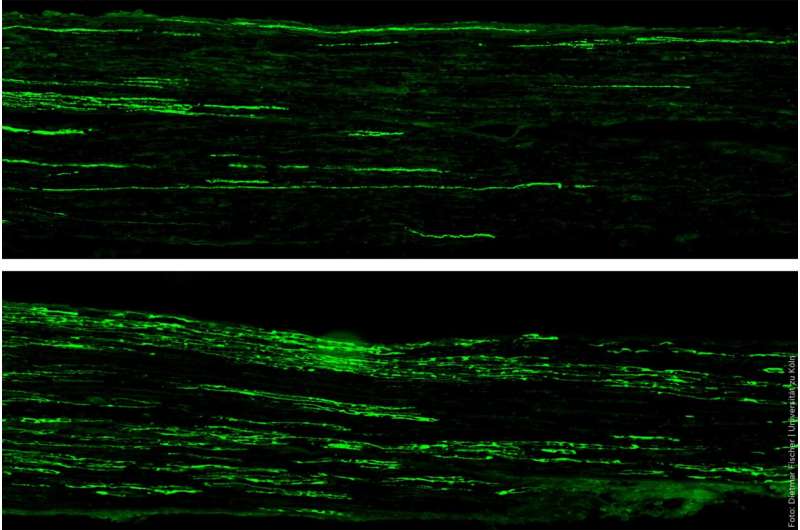
A research team led by Professor Dr. Dietmar Fischer, Professor of Pharmacology at the University of Cologne’s Faculty of Medicine, and Director of the Center for Pharmacology at University Hospital Cologne, has now identified a central mechanism that explains limited regeneration in diabetes.
Building on this, the researchers have developed a promising therapeutic approach that can be used to increase regeneration. Their findings were published in the Science Translational Medicine journal under the title “Failure of nerve regeneration in mouse models of diabetes is caused by p35-mediated CDK5 hyperactivity.”
Using mouse models of type 1 and type 2 diabetes mellitus, the team demonstrated a high accumulation of the p35 protein in nerve cells. This protein activates an enzyme that triggers a signaling cascade, which in turn blocks the regrowth of nerve fibers. This considerably restricts the nerves’ natural regenerative capacity.