
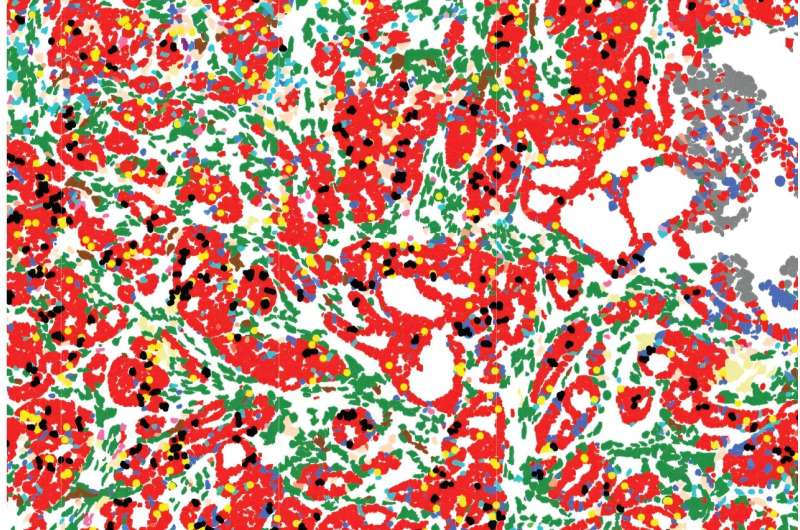
The breakthrough marks a major advance for the pioneering field of RNA-based medicine by providing a way to detect the hidden molecules, known as long noncoding RNA (lncRNA), and determine the likely role each plays in the growth of different cancers.
The researchers used their cutting-edge single-cell and spatial tissue analysis technologies and expertise, along with advanced computational and mathematical modeling, to develop the platform methodologies underpinning the new tool.
Using tissue samples from 13 types of cancer, including breast, brain, bowel and skin cancers, they found 219,442 potential lncRNA molecules, including 94,795 that had never been documented before, many of which emerged as top potential functional or otherwise interesting candidates.