
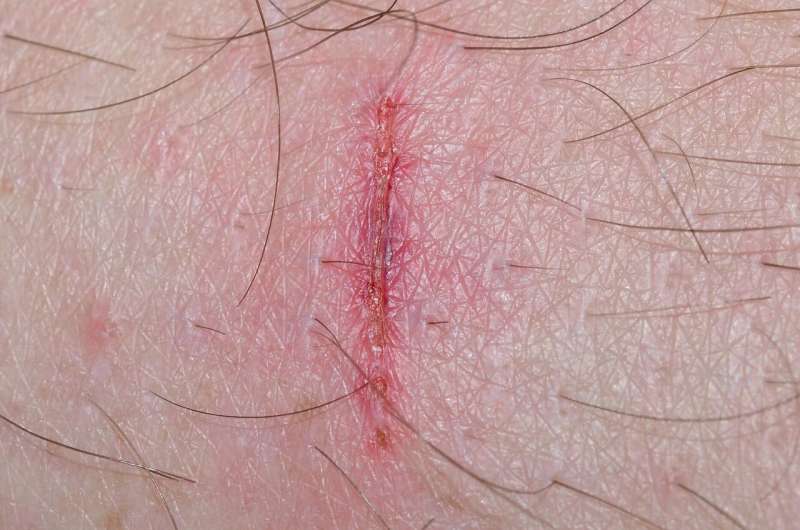
A new study, published in Advanced Science, shows that a multi-axis stretchable wound zipper (MSWZ) is effective in closing complex wounds quickly, improving wound healing. The MSWZ uses programmable force that can be personalized via mobile application, enhancing patient comfort and compliance.
Current conventional approaches, such as sutures, cannot adapt to complex wound shapes and require health care professionals for their application. New alternatives, like temperature-responsive contractile dressings, are promising, yet can be unpredictable, compromised by environmental factors, and insufficient in their force to close a wound.
Flexible bioelectronic systems enable precise control of mechanical contraction, though they have not yet been used in wound healing.