
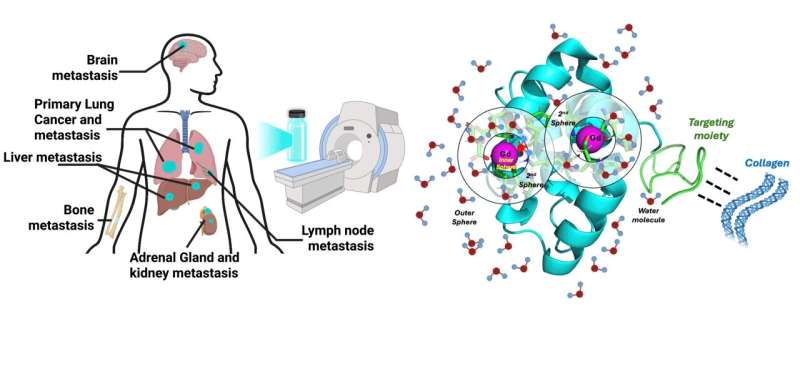
“Lung cancer is often diagnosed only after it has spread, when treatment options become more limited,” Yang said. “Our technology can detect tiny tumors and hidden metastases without exposing patients to radiation. It also helps reveal how aggressive a cancer may be and how likely it is to spread, potentially reducing the need for invasive biopsies.”
Targeting collagen in aggressive tumors
The research describes a protein-based MRI contrast agent, hProCA32.Collagen, which targets collagen type I, a structural protein found at elevated levels in aggressive lung tumors and metastatic lesions. In preclinical studies, this technology enabled researchers to detect and quantify small lung tumors and metastases in the lung, adrenal glands and kidneys while mapping biological features linked to tumor invasion and progression.