
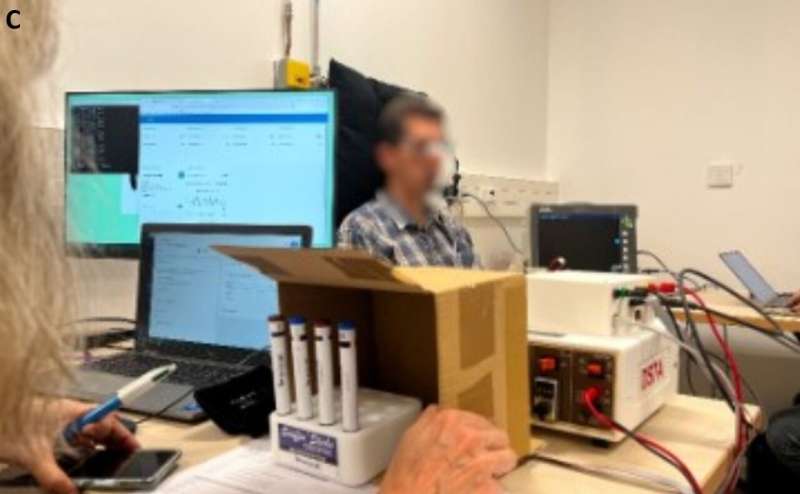
The loss of smell (anosmia or hyposmia) is a major problem that affects around 20% of the global population. It can be caused by a variety of factors, such as infections, medications, or injuries and may be permanent or temporary. Unlike hearing loss or vision impairment, where cochlear implants or prosthetics are available, there are no implants or devices that can restore the sense of smell. This new research may be a vital step toward developing a practical solution for more than a billion people.
How it works
The team behind the device describes their work in a paper published in the journal Science Advances. They developed a system that captures odors using an artificial nose (e-nose) and translates that chemical information into a specific digital code. This code is then passed through an intranasal electrical stimulator (a small magnetic clip) placed on the septum, the wall separating the nostrils, to trigger the trigeminal nerve.