
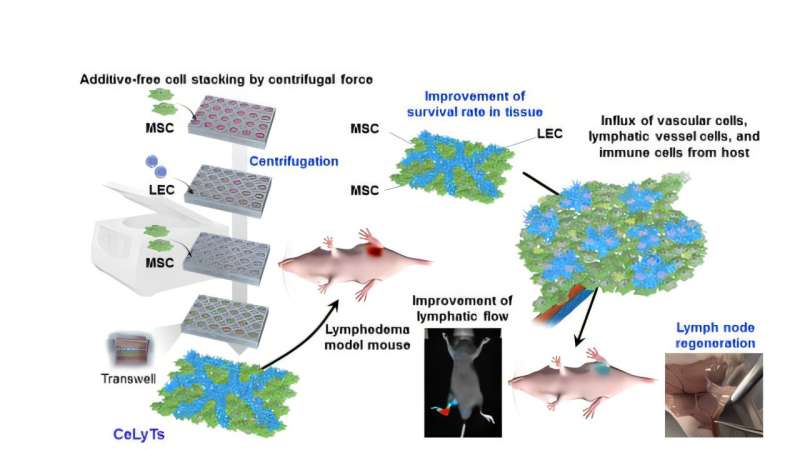
Since lymph nodes do not naturally regenerate once removed, their absence can lead to a condition known as secondary lymphedema. It manifests as chronic swelling, discomfort, and reduced mobility in affected limbs or regions, severely affecting a patient’s quality of life.
Current challenges in lymphedema treatment
Consequently, a major focus within the field of regenerative medicine is the development of strategies to restore or regenerate damaged lymphatic structures to effectively treat secondary lymphedema.
Existing approaches have largely centered on stem cells and lymphatic tissue transplantation. However, these techniques often require complex preparation protocols and, more importantly, have demonstrated limited efficacy in improving the key clinical symptoms of lymphedema.