
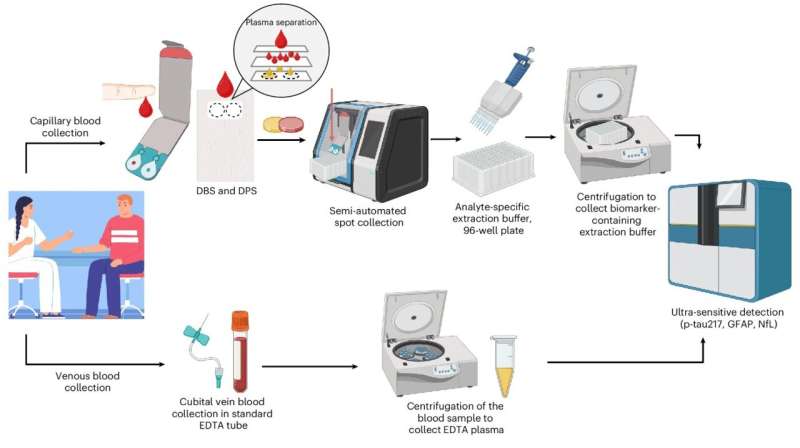
The research, led by U.S. institute Banner Health working with the University of Exeter Medical School, is published in Nature Medicine. It represents the first large-scale validation of this accessible testing approach that removes geographic barriers and opens brain disease research to global populations without requiring specialized health care infrastructure.
How the DROP-AD project was conducted
The DROP-AD project, conducted across seven European medical centers including the University of Gothenburg and University of Exeter, successfully tested 337 participants and proved that finger-prick blood collection can accurately measure key markers of Alzheimer’s pathology and brain damage. This breakthrough enables worldwide research participation by eliminating the logistical constraints that have historically limited biomarker studies to well-resourced medical facilities.