
CAR-T cell therapy works by isolating a patient’s T cells, genetically modifying them to recognize and target cancer cells, and returning them to the patient. While the approach has transformed treatment for some blood cancers, producing a personalized therapy for each patient can be costly and time-intensive.
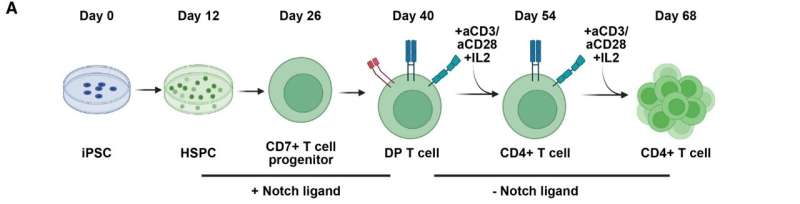
iPSCs, which are generated from donated adult skin or blood cells, could enable the large-scale production of T cells that could be used “off the shelf” for many patients rather than being made individually for each one. A key challenge, however, has been reliably generating functional CD4+ helper T cells, which play an important role in coordinating and regulating immune responses.