
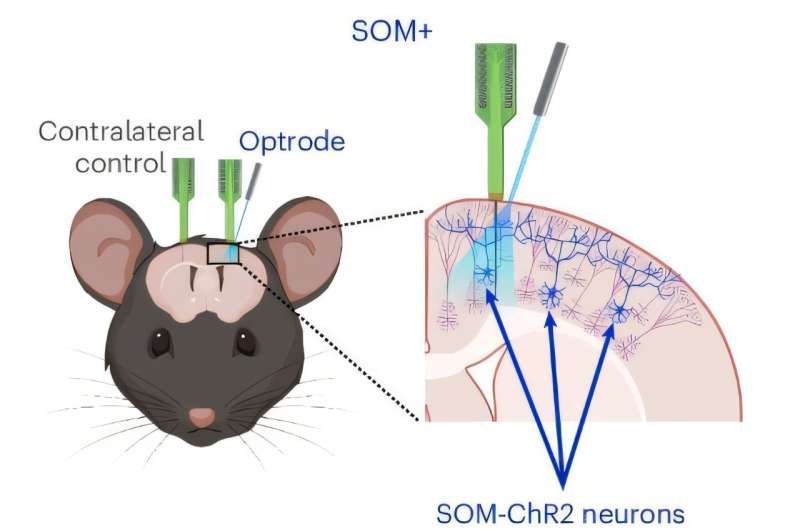
“What we’re essentially doing is forcing sleep in a local region of the brain. While that part is solidifying memories and restoring learning capacity, other parts stay aware/vigilant and connected to the environment,” said corresponding author Chiara Cirelli, M.D., Ph.D., a professor of psychiatry at the University of Wisconsin-Madison. “Dolphins do something similar, sleeping with only one brain hemisphere at a time.”
Non-rapid eye movement (NREM) sleep, which makes up about 80% of sleep for adults, is when the junctions between neurons that make memories are evaluated. During this phase, the brain protects important connections for long-term storage, prunes those that are less necessary, and makes space for new ones.