
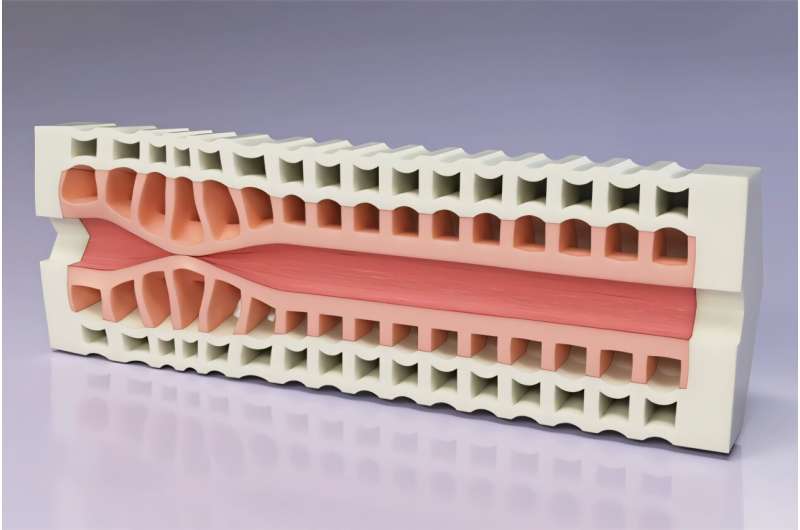
University College Dublin researchers have developed a robotic model of the human esophagus, transforming how swallowing disorders are studied, diagnosed and treated. Dysphagia, or difficulty swallowing, affects around 20% of the global population, and up to 50% of people over 60. Until now, research has relied on limited models that cannot replicate the majority of swallowing disorders, hindering both understanding of the condition and the development of effective treatments.
But new research, published in Nature Communications, from CÚRAM, the Research Ireland Centre for Medical Devices, based at UCD, in collaboration with Massachusetts Institute of Technology and Harvard Medical School, have developed “RoboGullet”—the first system capable of realistically replicating the complex mechanics of human swallowing.