
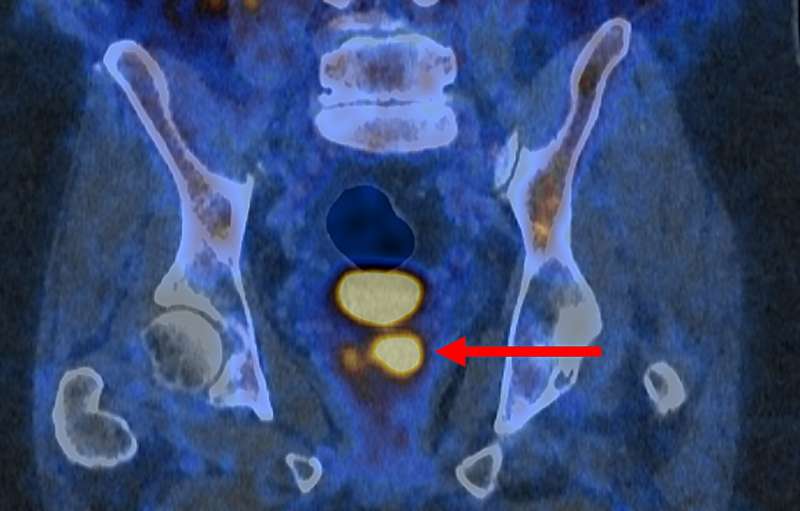
The PSMA PET/CT scan identifies more aggressive prostate cancer cells, which are potentially harmful and may need treatment. It does this with a molecule that binds to prostate cancer cells and causes them to “glow,” appearing as bright spots in the scanning image. This could also help reduce the risk of overdiagnosis by determining which cancers are low-risk and will never cause harm, the study says.
People with suspected prostate cancer usually have an MRI scan to look for abnormal areas of the prostate. If MRI results are suspicious or inconclusive, patients undergo a biopsy that takes small pieces of prostate tissue and looks for cancer cells. This is a routine but invasive procedure that can be uncomfortable and sometimes worrying for patients and is associated with side effects.